Listening to Objects
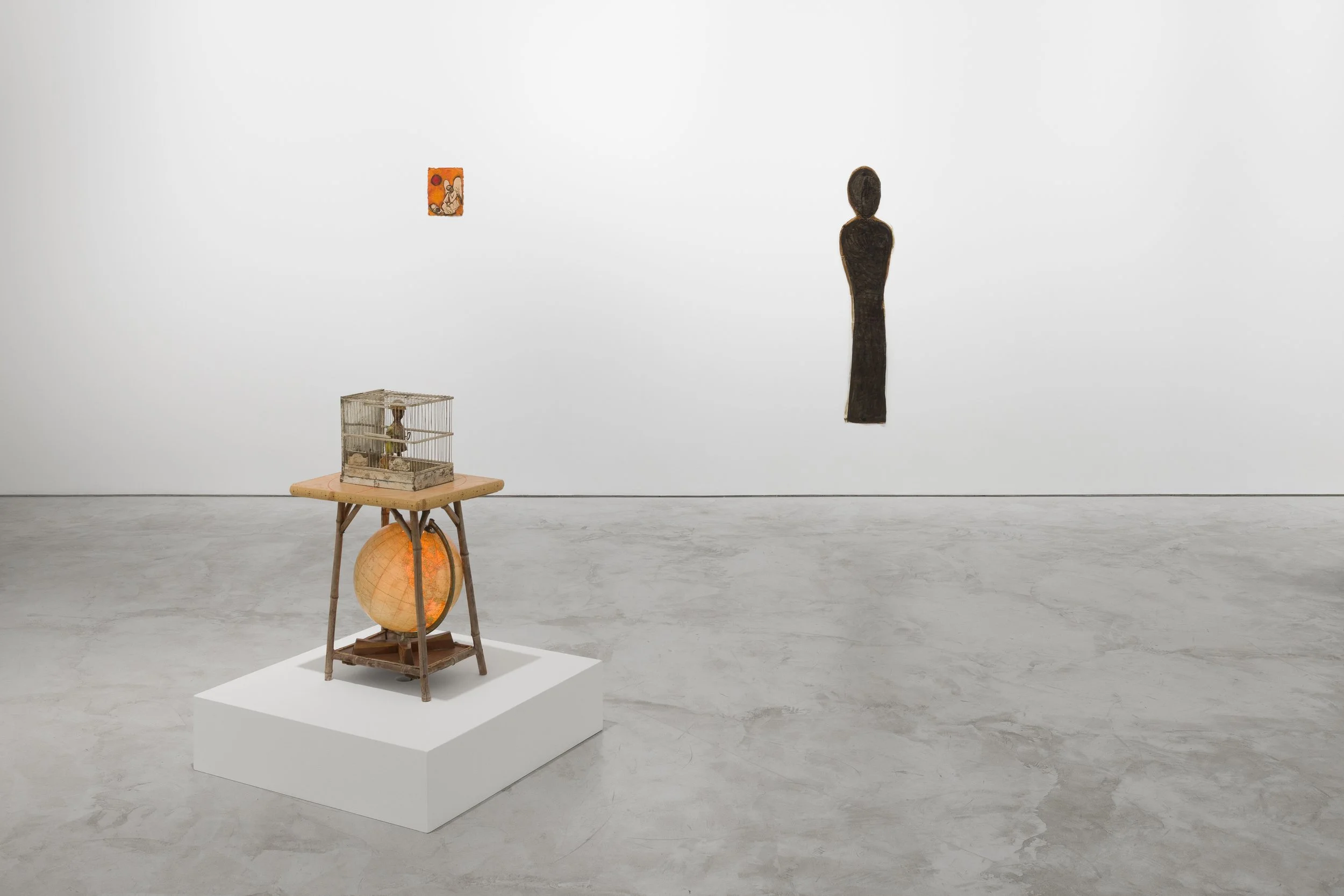
Listening to Objects
Arnold J. Kemp, Betye Saar, Mira Schor, Nádia Taquary and Nicole Wermers
16 January–28 February 2026
Maximillian William is pleased to present Listening to Objects, a group exhibition featuring Arnold J. Kemp, Betye Saar, Mira Schor, Nádia Taquary and Nicole Wermers. In an age of constant distraction, sustained attention to the complex nature of any artwork is an act of radical resistance. The artists in Listening to Objects invite viewers to spend time navigating the tension between legibility and materiality, mystery and revelation.
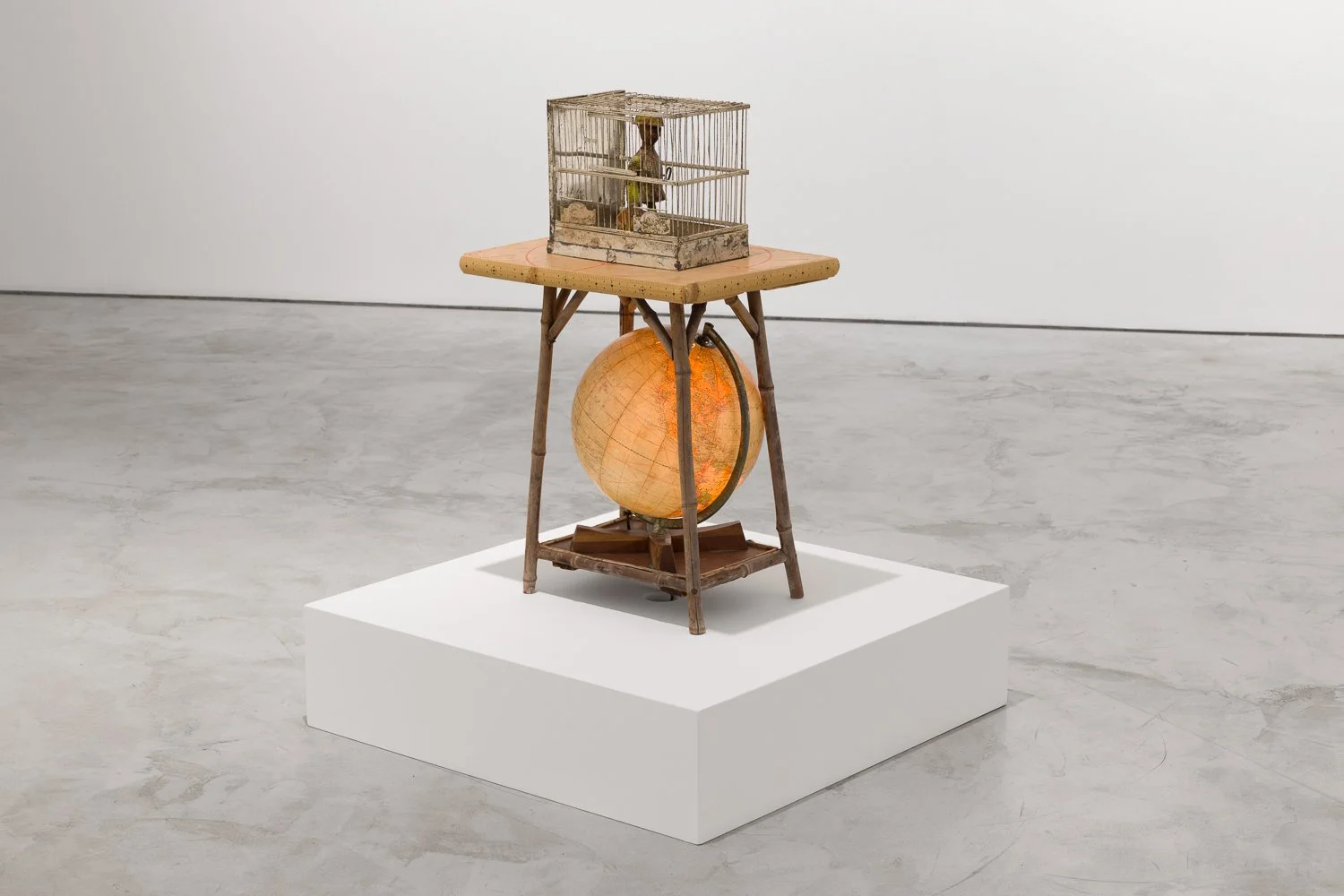
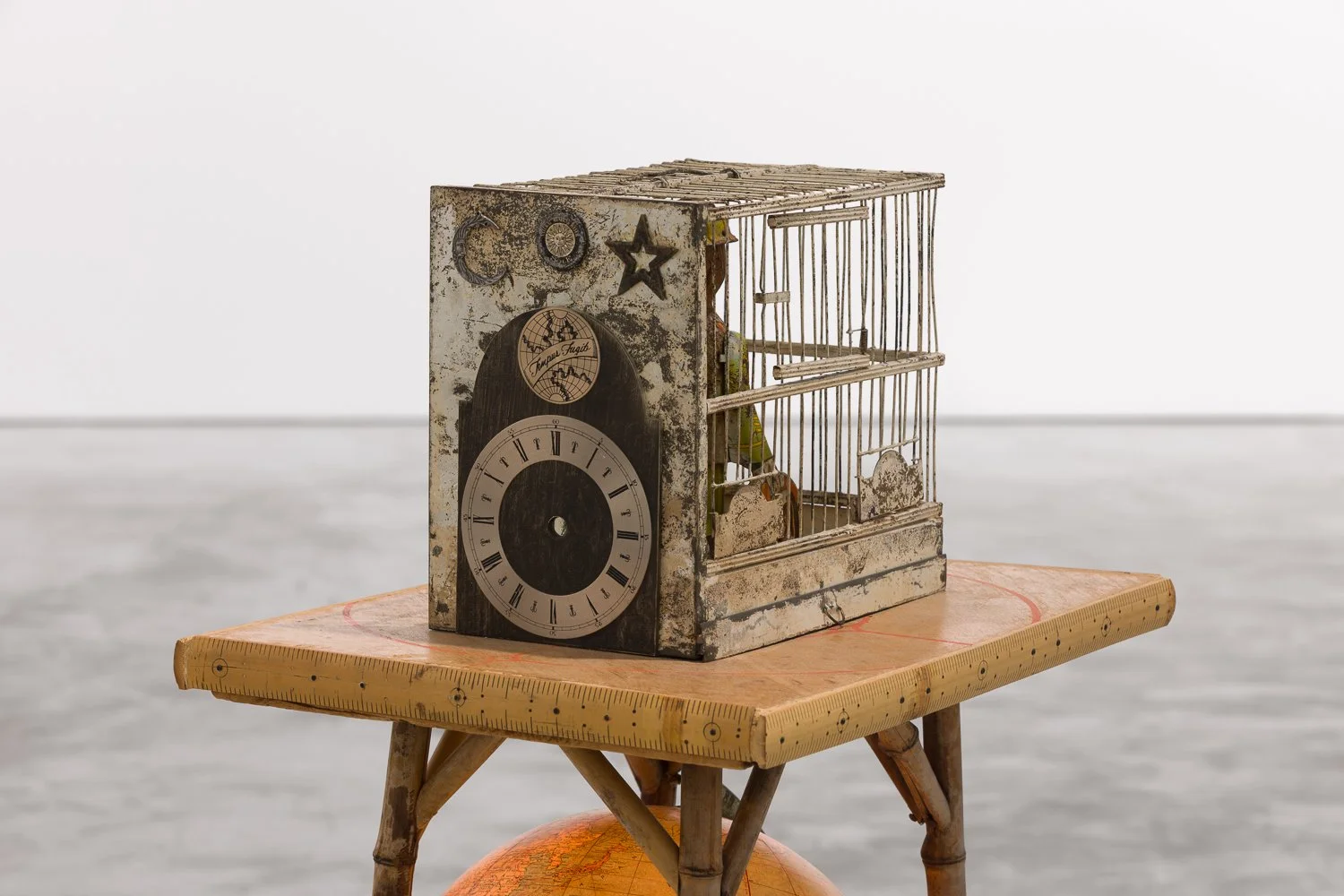
Betye Saar’s Globe Trotter (2007) addresses the history of migration, education and racial injustice. A small cage holds a vintage toy soldier, its features worn and rusted by time. The edge of the table is lined by a bamboo ruler, introducing notions of measurement and statistics, and the historical misuse of these ideas. The ruler also serves to remind the viewer of the tininess of the cage compared to the implied enormity of the globe below. Illuminated from within, the globe hints at a planet that is bright and full of promise, yet unavailable to the caged soldier.
Created from shells, straw, beading, repurposed wood and other found materials, the works in Nádia Taquary’s Oriki series are mask-like forms that confront the viewer like unplaceable artefacts. Embodying Afro-Brazilian traditions and practices, each of the works in her Oriki series has a ritualistic presence, at once an invitation to revel in beautiful surfaces and a challenge to how we might interpret complex artworks that emerge from hybrid cultures.
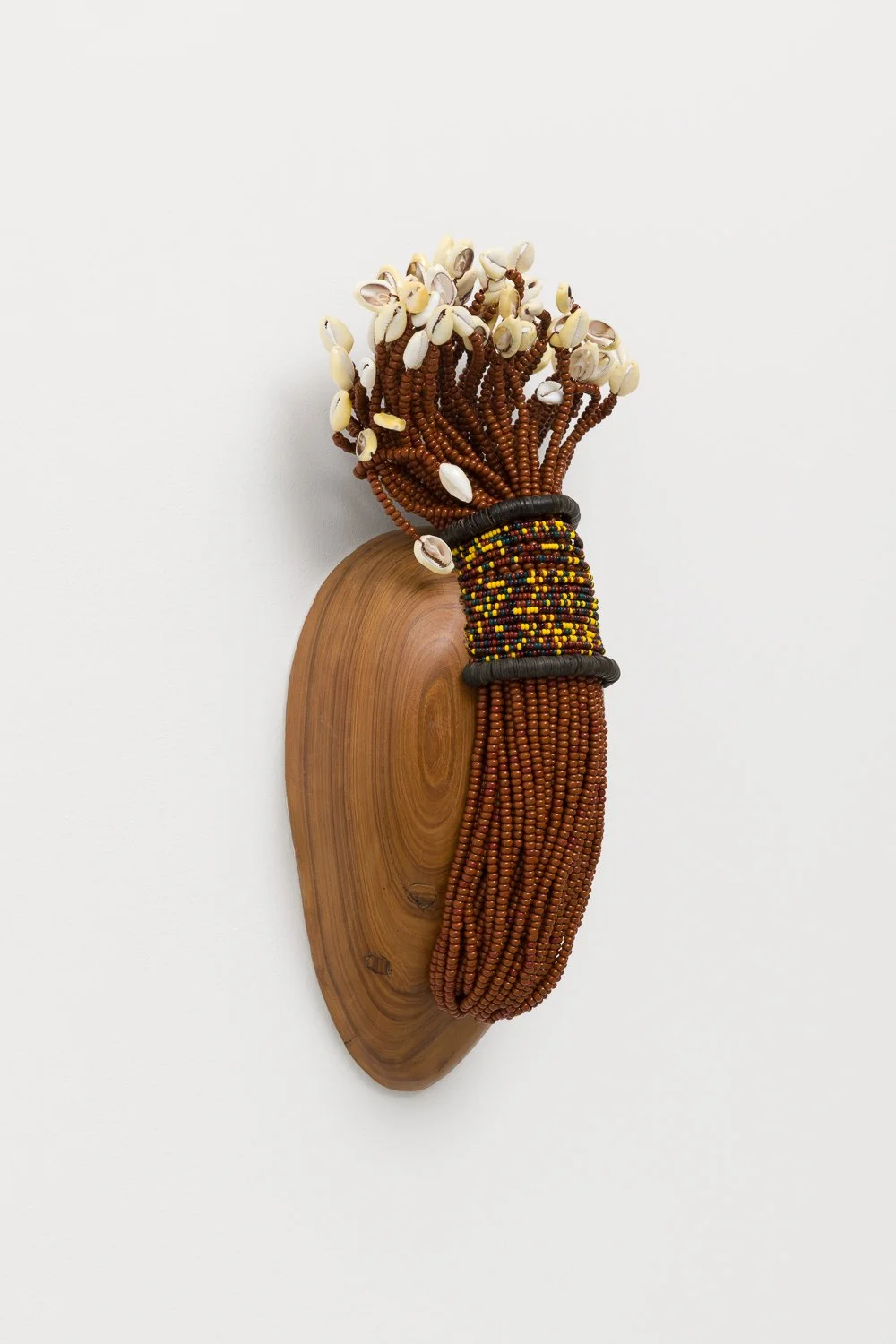
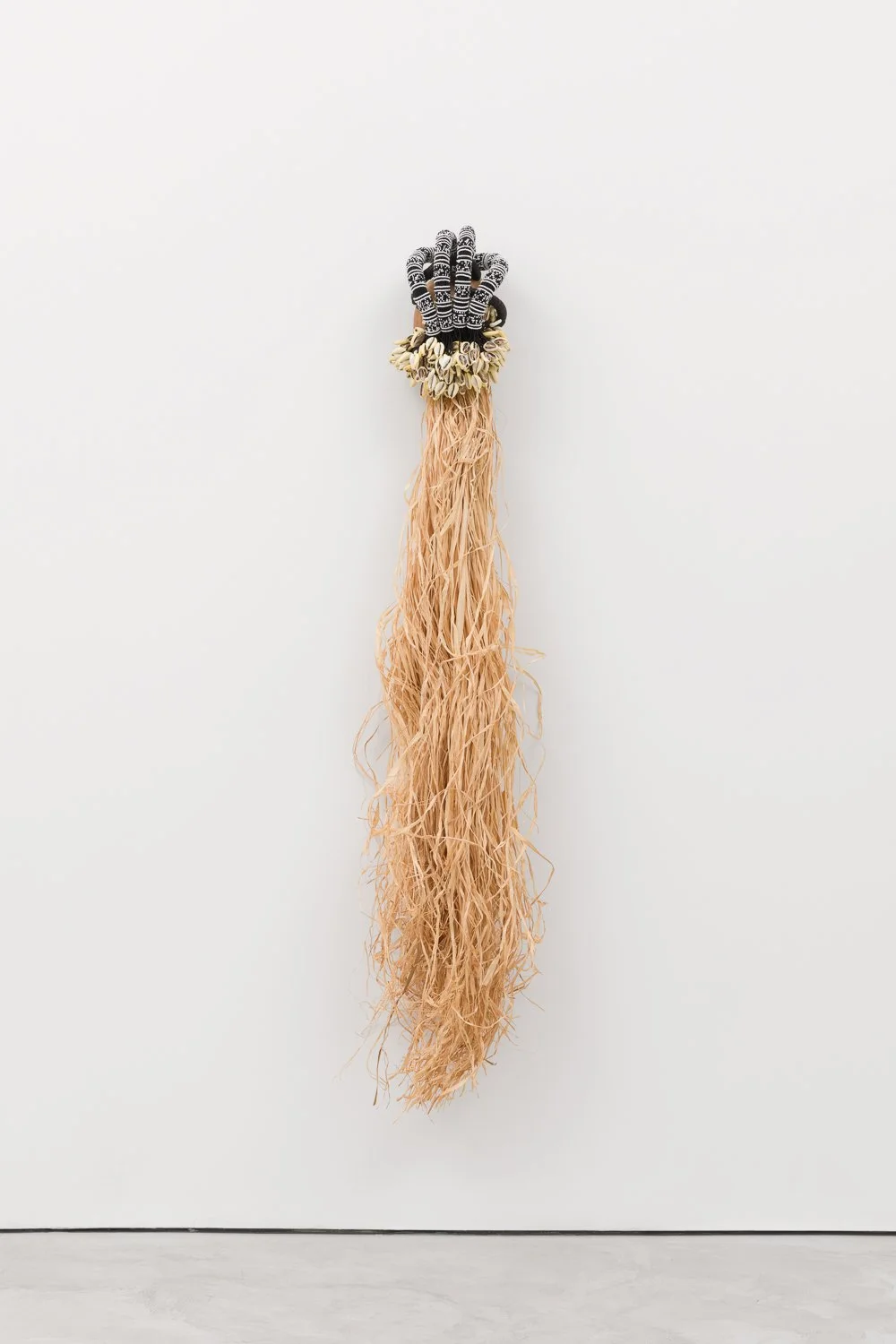
Created from shells, straw, beading, repurposed wood and other found materials, the works in Nádia Taquary’s Oriki series are mask-like forms that confront the viewer like unplaceable artefacts. Embodying Afro-Brazilian traditions and practices, each of the works in her Oriki series has a ritualistic presence, at once an invitation to revel in beautiful surfaces and a challenge to how we might interpret complex artworks that emerge from hybrid cultures.
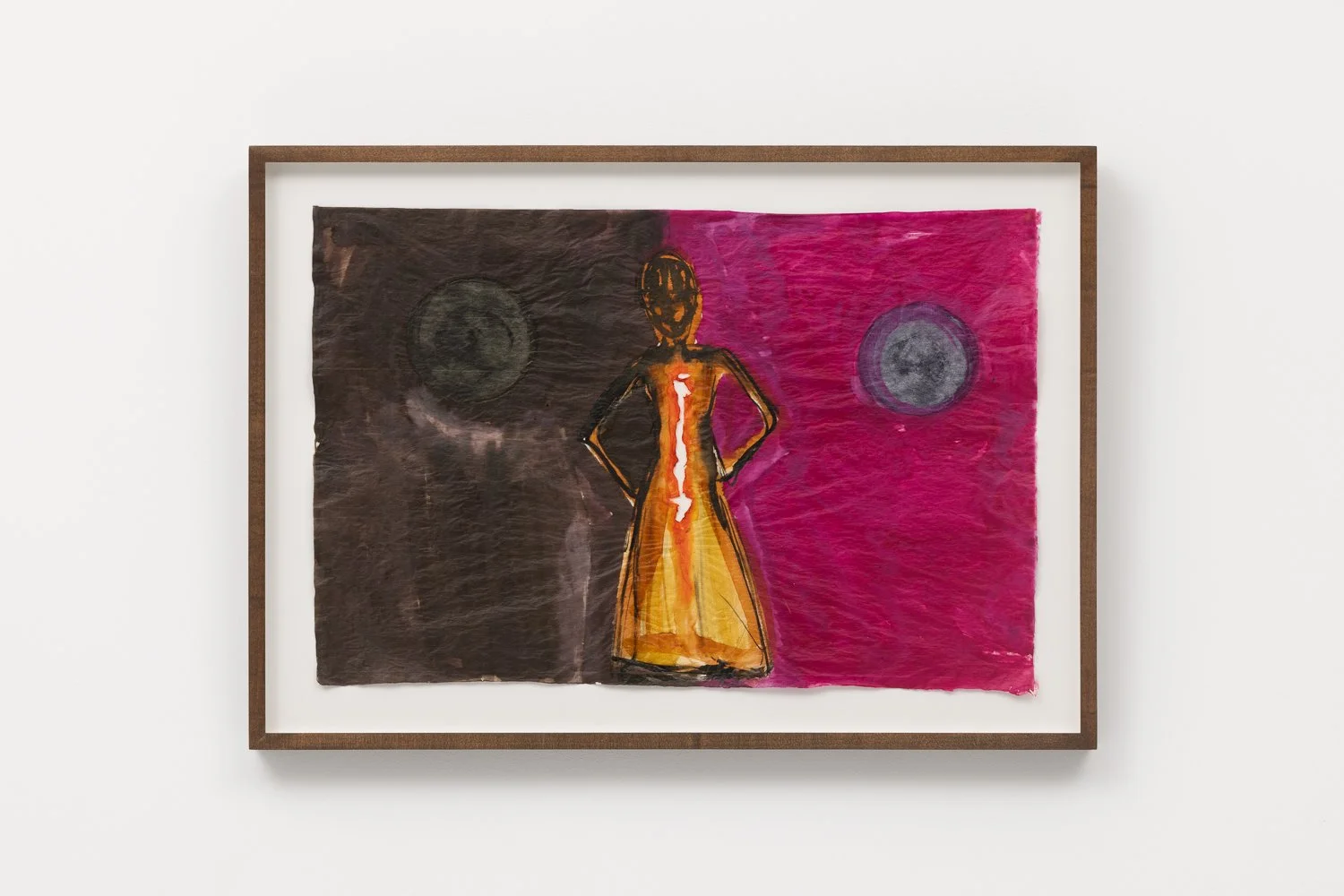
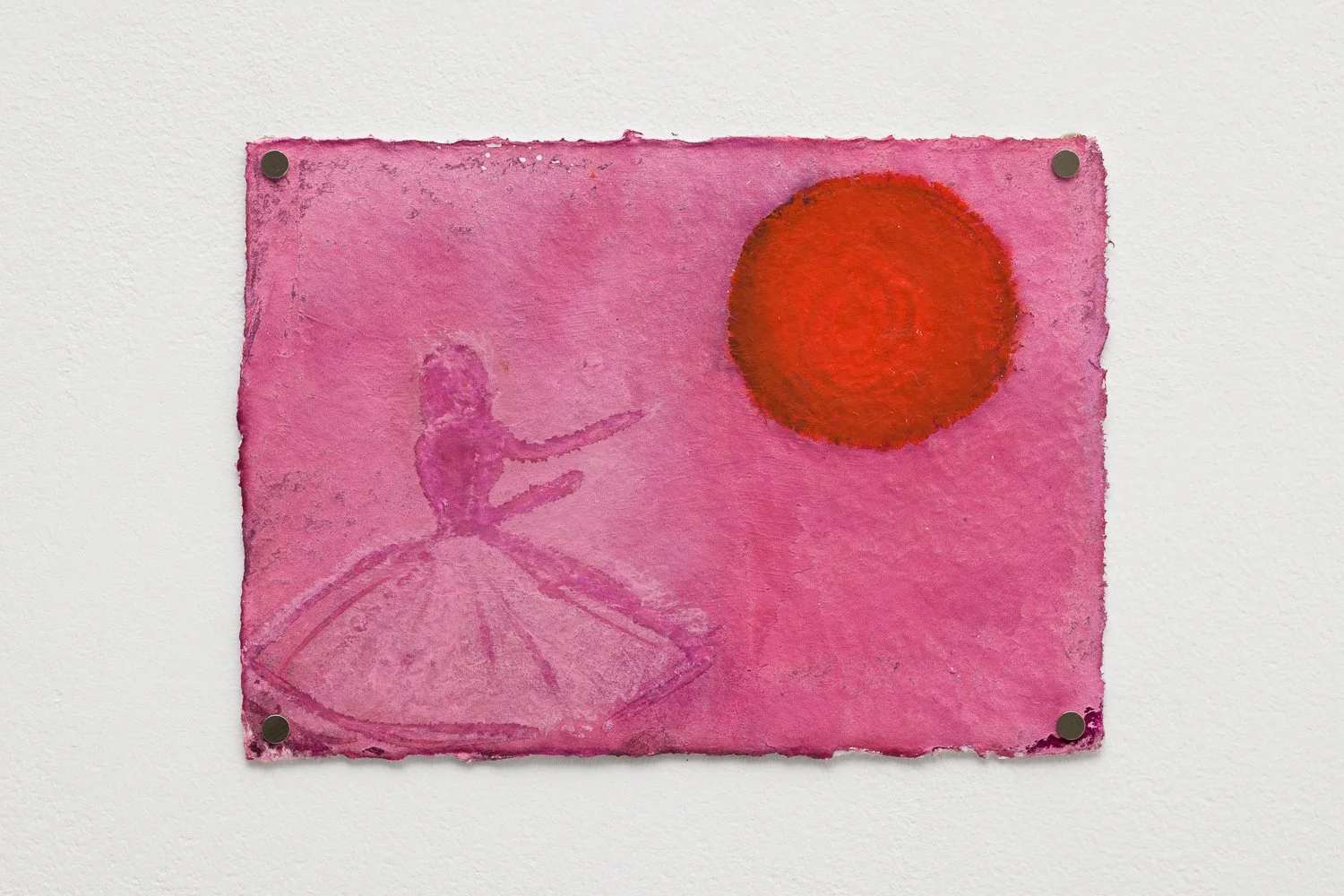
A fearless visionary for the past five decades, Mira Schor draws upon art history and feminist theory to address the role of art in an era of constant crisis. Schor’s recent works on paper feature women in enclosed spaces, alone and in conversation with an orb or circle. In Untitled (2024), a winged figure looks at a book, the pages open to a spread of one dark and one light circle. The figure contemplates the shapes as if they are comprehensible sources of information, and yet their meaning remains obscure. In his varied oeuvre, Arnold J. Kemp often researches forgotten figures and histories, creating work that invites the viewer to engage imaginatively with voices from the past. An homage to the great jazz musician and poet, Cecil Taylor / MOB (2024) conjures, with a veil of elegant greys, an elegiac space of music and contemplation. Kemp’s painting, and all the artworks in Listening to Objects, invite viewers to approach artworks with openness and curiosity, granting them the same level of attention that we offer a book, a piece of music, or a person.
Arnold J. Kemp (b. 1968, Boston, MA) works in painting, print, sculpture and poetry. Recent exhibitions include Less Like an Object, More Like the Weather, Neubauer Collegium, University of Chicago; False Hydras, JOAN, Los Angeles; and When the Sick Rule The World, Biquini Wax, EPS, Mexico City. Forthcoming in 2026, a mid-career survey, Not One Thing, Tufts University Art Galleries and the publication Arnold J. Kemp: A Reader, co-published by No Place Press and Tufts University Art Galleries. His works are in the collections of Metropolitan Museum of Art, New York; Studio Museum, Harlem; Berkeley Art Museum and Pacific Film Archive, Berkeley; Portland Art Museum and Hammer Museum, Los Angeles, among other public collections.
Betye Saar (b. 1926, Los Angeles, CA) is an American artist whose pioneering assemblage practice has played a formative role in contemporary art since the mid-twentieth century. Working with found objects and symbolically rich materials, Saar’s work has been widely recognised for reflecting on African-American identity, spirituality and the interconnectedness between different cultures. Her work has been exhibited internationally and is held in major public collections.
Mira Schor (b. 1950, New York City, NY) is an American artist and writer, operating in the nexus of language, painting and feminist theory. She has exhibited at Bourse de Commerce – Pinault Collection, Paris; Centre Pompidou, Paris; Musée d’art contemporain de la Haute-Vienne, Rochechouart; Jewish Museum, New York; Hammer Museum, Los Angeles; Musée d'Art Moderne de la Ville de Paris; MoMA P.S.1, New York; Neuberger Museum, Purchase; Aldrich Museum, Ridgefield; Hauser & Wirth; Lyles & King; David Nolan; and P.P.O.W., all New York; and Mendes Wood DM, São Paulo and Brussels, and many other institutions and galleries.
Nádia Taquary (b. 1967, Salvador, Brazil) is a Brazilian artist whose work explores Afro-Brazilian sacred traditions and the presence of Black female protagonism through sculpture and installation. Her practice draws on materials such as beads, shells and wood to investigate identity, ancestry and cultural memory. Taquary’s work has been exhibited internationally, including the 2025 International Biennial of Art of Antioquia and Medellín, the 36th São Paulo Biennial, the 24th Biennial of Sydney and the 15th Havana Biennial: Espirales Transatlánticas. Her works are in the collections of Pérez Art Museum, Miami, Museum of Arts and Design, New York; Institute for Studies on Latin American Art, New York; Pinacoteca de São Paulo, São Paulo; Museum of Art, Rio de Janeiro; Museu de Arte Moderna da Bahia, Salvador and Inhotim, Brumadinho.
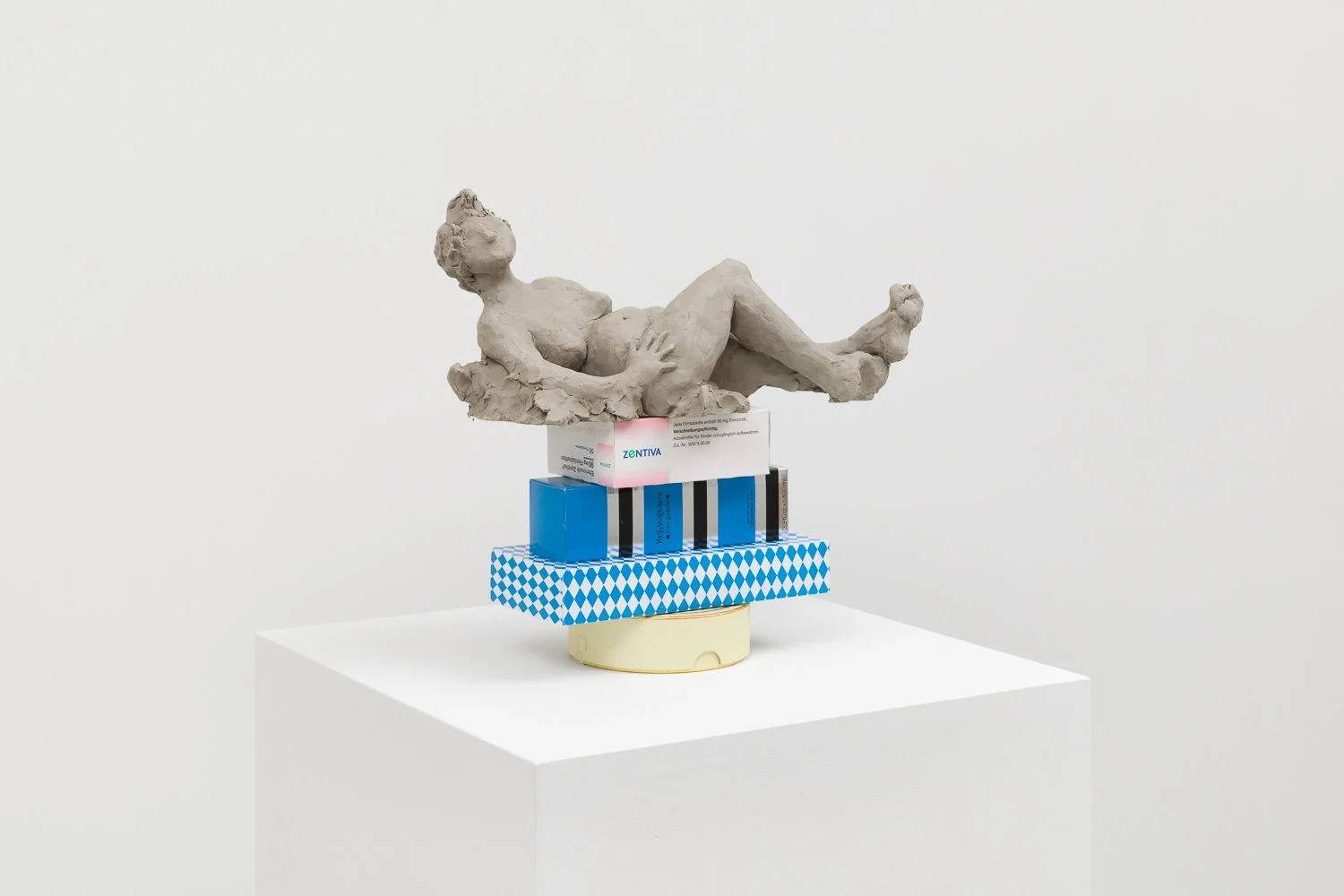
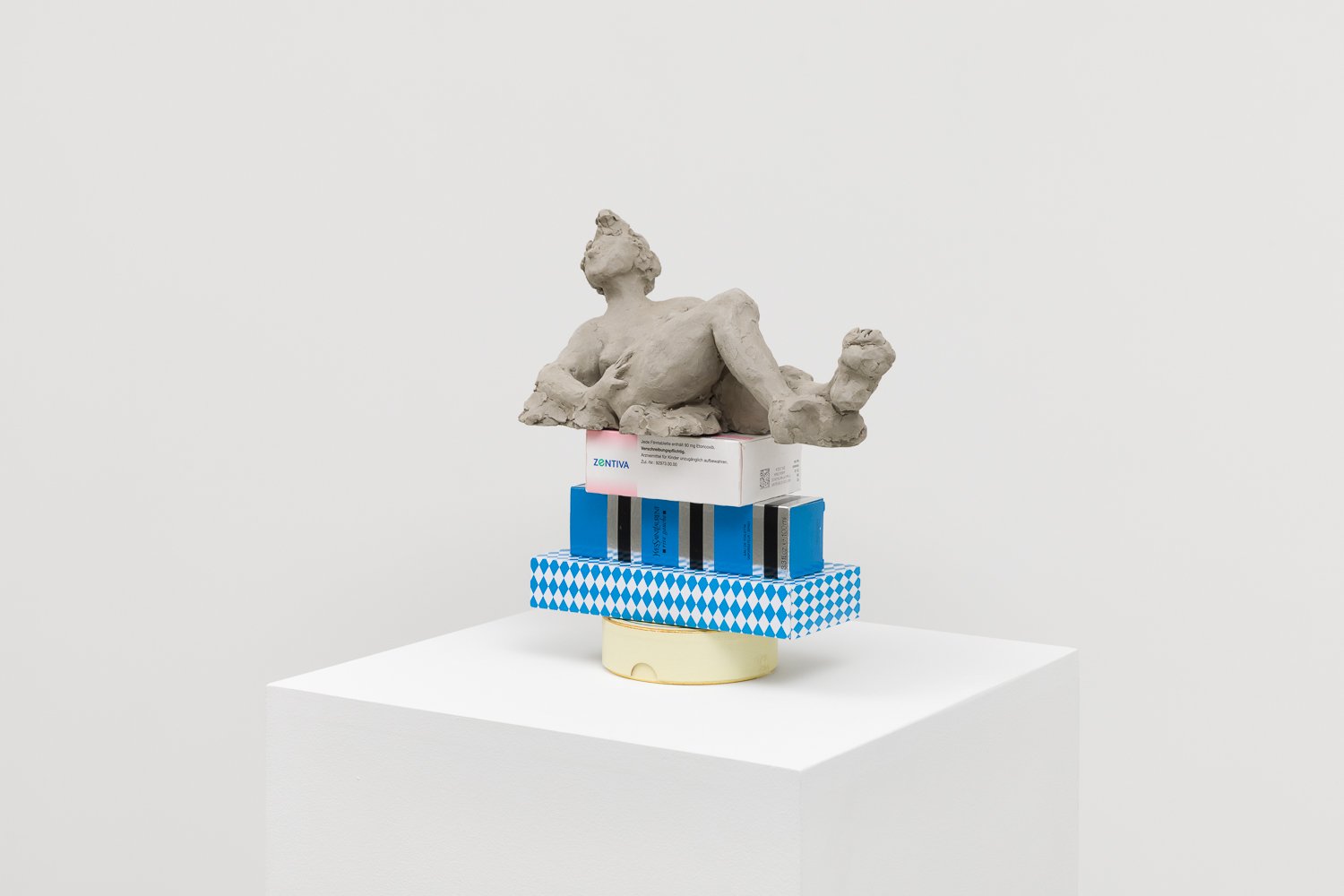
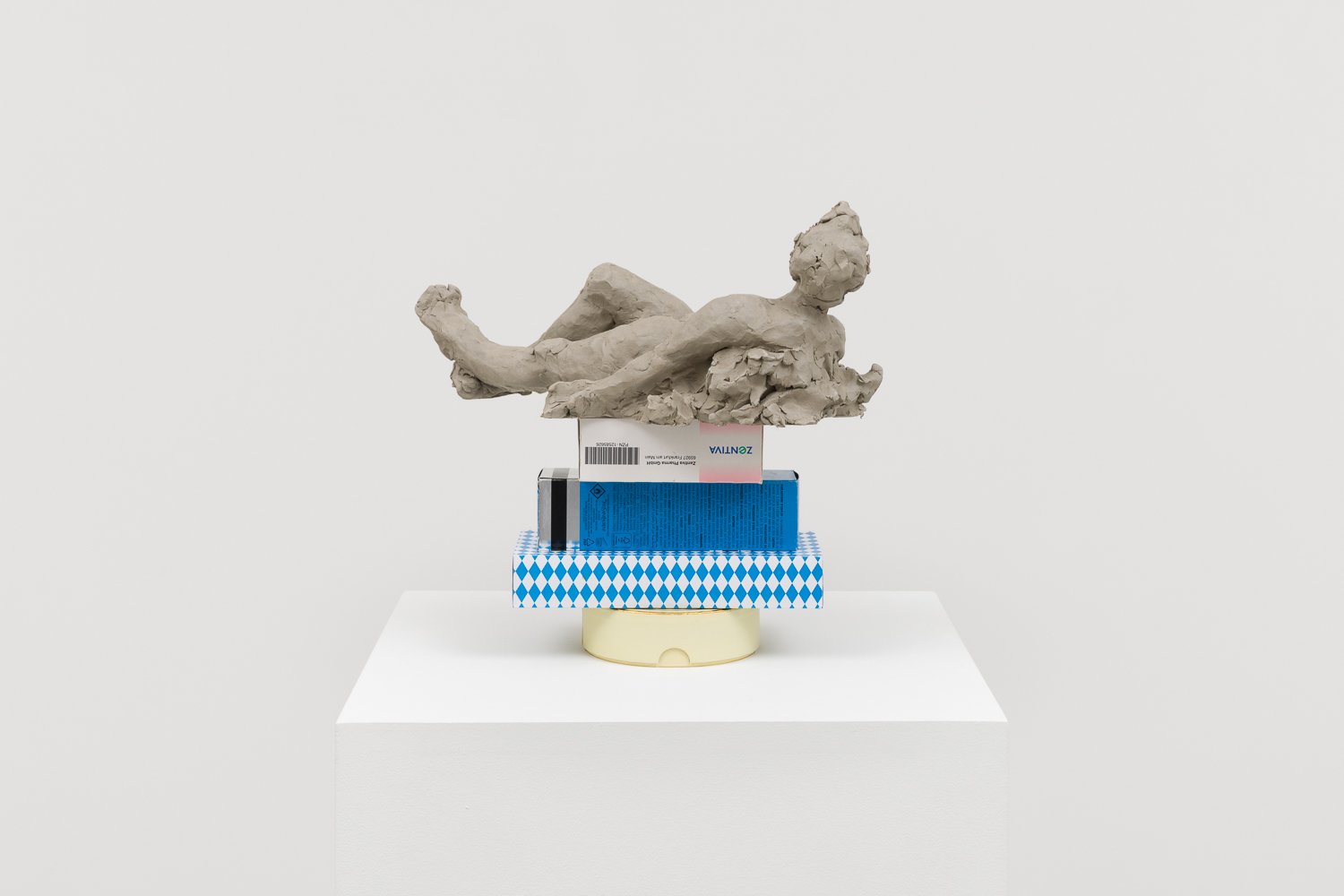
Nicole Wermers (b. 1971, Emsdetten, Germany) lives and works in London. Working primarily in sculpture, her practice explores the physical and social hierarchies embedded within urban space as well as how the (female) body relates to the built environment, often drawing on references from art history and vernacular culture. Her work has been exhibited widely in international institutions including Tate Britain, London; Lenbachhaus, Munich; Kunsthaus Glarus; The Common Guild, Glasgow; Aspen Art Museum; Camden Arts Centre, London; and Secession, Vienna. Wermers was nominated for the Turner Prize in 2015 and has received numerous awards, including the Rome Prize and the Helmut-Kraft-Foundation Prize for Fine Arts.